
This relationship between architecture and geography is something that has always played a role in how cities develop. From mountain town to seaside town, there is always something about the space around you that affects how you live your life. In modern urban development, there is perhaps no better example of this relationship between architecture and geography than Palm Jebel Ali.
Palm Jebel Ali is situated off the coast of Dubai, a part of Dubai’s forward-thinking strategy to expand metropolitan space out into the sea. Palm Jebel Ali is a massive artificial archipelago, a unique blend of land, water, architecture, and infrastructure all mixed together.
Unlike the conventional coastal communities where buildings are constructed next to the shoreline, Palm Jebel Ali is planned in a way that the ocean is an integral part of the layout of the residences. A new spatial concept of living between the sea and the land is what is being proposed here.
This blog is about the spatial design of Palm Jebel Ali and how it is redefining the concept of waterfront living and creating a new kind of architectural setting unlike any other.
The Palm-Shaped Spatial Design
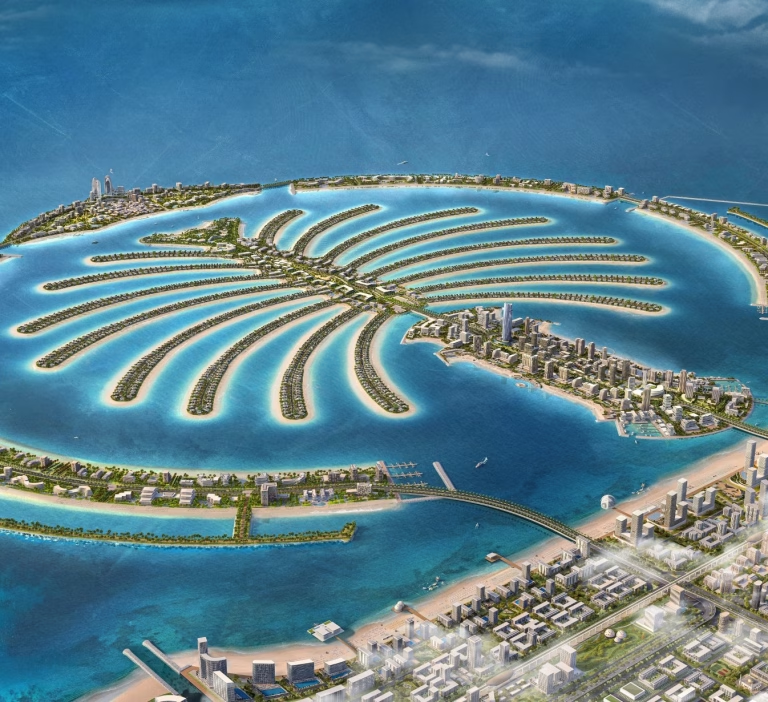
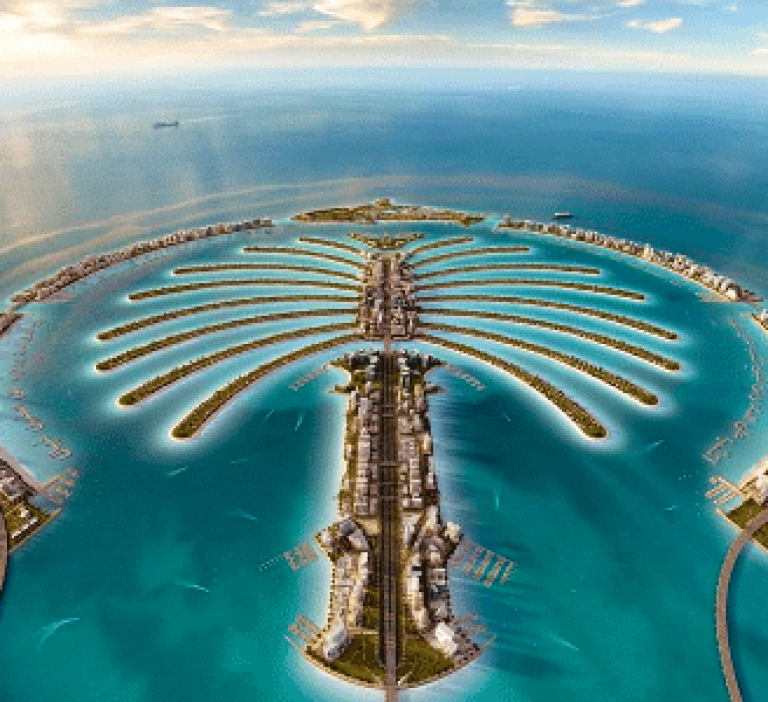
At the heart of Palm Jebel Ali’s planning is its distinctive palm-shaped structure. This design is not purely symbolic; it plays a key role in maximizing waterfront access.
The island consists of three main spatial elements:
The Trunk
The central spine acts as the primary access route, connecting the island to mainland Dubai. It also hosts mixed-use developments, services, and community facilities.
The Fronds
Extending outward from the trunk are multiple residential fronds, each lined with luxury villas. These fronds allow homes to face the water from multiple angles, ensuring that a large number of properties enjoy direct sea views.
The Crescent
The outer crescent acts as a protective barrier that reduces wave impact while also creating additional beachfront spaces and hospitality zones.
This layout allows Palm Jebel Ali to maximize coastline length while maintaining a structured urban environment.
Architecture Designed for Waterfront Living
Living between land and sea requires architectural solutions that respond to the surrounding environment. Homes in Palm Jebel Ali are designed to emphasize openness, light, and uninterrupted views of the ocean.
Key design features include:
Panoramic Windows
Large glass panels allow residents to experience the sea visually from almost every room.
Indoor-Outdoor Integration
Many homes include terraces, decks, and outdoor lounges that extend living spaces toward the waterfront.
Private Beach Access
Villas located on the fronds often have direct access to the beach, allowing residents to step from their homes onto the sand.
Open Layouts
Interior designs prioritize spacious living areas that capture natural light and ocean breezes.
This approach transforms the sea into a daily part of life rather than simply a distant view.
Creating a Sense of Spatial Freedom
One of the defining aspects of Palm Jebel Ali’s design is the feeling of openness created by the surrounding water. In traditional urban neighborhoods, buildings are often tightly arranged with limited views beyond nearby streets.
In contrast, island living introduces a sense of spatial freedom.
Homes overlook expansive horizons where the ocean stretches outward without visual barriers. This openness creates a psychological sense of calm and relaxation that is difficult to achieve in dense city environments.
The presence of water also softens the urban landscape, balancing architectural structures with natural elements.
Integrating Infrastructure with the Ocean
Designing a city on water requires advanced infrastructure planning. Roads, utilities, and transportation networks must function seamlessly while adapting to a marine environment.
Palm Jebel Ali’s master plan integrates infrastructure carefully into the island’s layout. Bridges and access roads connect residential clusters to the mainland, ensuring smooth travel between the island and central Dubai.
Public promenades, cycling paths, and waterfront walkways are also incorporated into the design, allowing residents to move easily through the community while enjoying scenic views of the sea.
This combination of connectivity and natural beauty enhances the everyday living experience.
A New Model of Island Living
Island living has traditionally been associated with remote destinations or vacation resorts. Palm Jebel Ali introduces a different concept—an island community that functions as part of a major global city.
Residents can enjoy the tranquility of coastal living while remaining close to Dubai’s business districts, entertainment hubs, and cultural attractions.
This balance between isolation and connectivity makes the development particularly attractive for those seeking both privacy and convenience.
The Appeal of Waterfront Environments
The popularity of waterfront properties around the world highlights the strong emotional connection people have with water. Coastal views, fresh sea air, and the rhythmic sound of waves create a relaxing atmosphere that many buyers find highly desirable.
Developments like Palm Jebel Ali capitalize on this appeal by integrating water into nearly every aspect of the living environment.
Whether through private beaches, marina views, or ocean-facing terraces, the design ensures that residents remain visually and physically connected to the sea.
Shaping the Future of Coastal Urban Design
Palm Jebel Ali reflects a broader trend in global urban development—the expansion of cities into coastal environments through innovative engineering and architecture.
Artificial islands allow developers to create new waterfront spaces where natural coastlines are limited. At the same time, they provide opportunities to experiment with unique urban layouts and spatial experiences.
By combining engineering expertise with architectural creativity, Palm Jebel Ali demonstrates how cities can evolve beyond traditional boundaries.
Conclusion
Palm Jebel Ali is not just a luxury real estate venture, but rather a study of how architecture can evolve to accommodate spaces where land and water coexist.
With its design that features palm trees, villas, and infrastructure, Palm Jebel Ali is a living space that is both expansive and intimate, where one can experience the vastness of the sea while still being connected to one of the world’s most exciting cities.